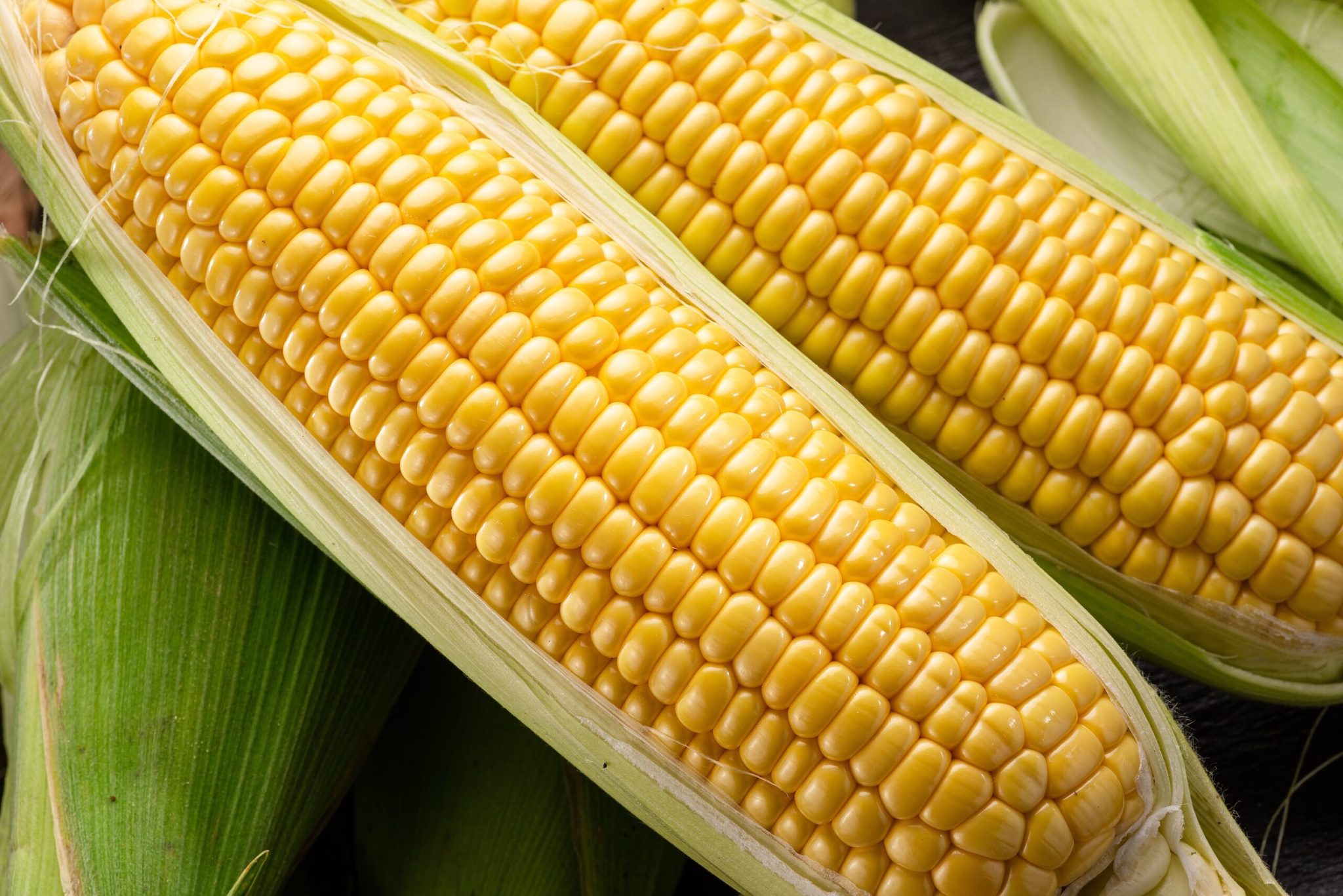
Corn on the cob is one of summer’s simplest foods. It’s inexpensive, widely available, and at its sweetest when it’s in season. It also doesn’t need much to taste good—a quick trip to the grill or a few minutes in boiling water is often all it takes. As a whole, minimally processed food, corn can absolutely have a place in a balanced weight-loss plan.
It also has one advantage that’s easy to overlook: you can’t eat it very quickly. Because you have to bite the kernels off the cob a little at a time, it naturally slows the pace of your meal. Eating more slowly gives your brain and digestive system more time to communicate, making it easier to notice when you’re comfortably full instead of continuing to eat on autopilot.
It’s also a relatively balanced side dish. A medium ear of corn has about 90 calories, along with roughly 2 grams of fiber, 3 grams of protein, and nutrients like potassium and folate. It also provides antioxidants, including lutein and zeaxanthin, which support eye health. Taken together, those qualities make corn a nutritious addition to a balanced diet. Here’s what the research says about how it may support your weight-loss goals.
✅ Quick answer: Is corn on the cob good for weight loss?
Yes. Corn on the cob can fit well into a weight-loss plan, especially when it’s grilled or boiled and lightly seasoned. A medium ear has about 90 calories, 2 grams of fiber, and 3 grams of protein, making it a satisfying side dish that’s relatively low in calories. Because you eat it one bite at a time, it also naturally slows the pace of a meal, which may make it easier to recognize when you’re comfortably full. The biggest consideration is what you put on it: generous amounts of butter, cheese, or mayonnaise-based toppings can quickly add more calories than the corn itself.
🚀 Weight-loss benefits of corn on the cob
- Keeping the corn on the cob naturally slows down your eating. A medium ear of corn takes time to eat. Working your way around the cob naturally slows the pace of a meal, giving your brain and digestive system more time to communicate. That can make it easier to notice when you’re comfortably full before reaching for seconds.
- Corn on the cob provides fiber for relatively few calories. A medium ear has about 90 calories and 2 grams of fiber. While that’s not an exceptionally high amount of fiber, it still adds volume to your meal and can help make it more satisfying, especially when paired with protein and other vegetables.
- Corn on the cob has a moderate effect on blood sugar. Sweet corn has a glycemic index of about 52, placing it in the low-to-moderate range. That means it generally causes a slower rise in blood sugar than many refined carbohydrates, especially when eaten as part of a balanced meal. A steadier blood sugar response may help reduce hunger and energy crashes later on.
⚠️ Things to be mindful of with corn on the cob
- Corn on the cob is best with simple toppings. A plain ear has about 90 calories, but generous amounts of butter, cheese, mayonnaise, or oil can quickly add as many—or more—calories than the corn itself. Herbs, spices, lime juice, or a light sprinkle of Parmesan add plenty of flavor without changing the nutrition as much.
- Corn on the cob isn’t a complete meal on its own. A medium ear provides about 3 grams of protein, so it’s best enjoyed alongside a protein source, such as grilled chicken, fish, tofu, or beans. Pairing it with protein and other vegetables also makes for a more balanced, satisfying meal.
- Portion size still matters. Corn is a nutritious whole food, but calories can add up if you’re eating multiple ears alongside other barbecue favorites. Enjoying one ear as a side dish is an easy way to fit it into a balanced weight-loss plan.
🥗 Nutrients in corn on the cob (per 1 medium ear, cooked, about 90 g)
| Nutrient | Amount | v |
|---|---|---|
| Calories | 90 calories | 5% |
| Protein | 3 g | 6% |
| Total carbs | 19 g | 7% |
| Fiber | 2 g | 7% |
| Sugars | 5 g | — |
| Total fat | 1 g | 1% |
| – Saturated fat | 0.2 g | 1% |
| – Monounsaturated fat | 0.3 g | — |
| – Polyunsaturated fat | 0.5 g | — |
| Omega-3 | 0 g | — |
| Omega-6 | 0.4 g | — |
*Recommended dietary allowance (RDA) is defined as the average daily amount of nutrients needed to meet the requirements of nearly all healthy people in a specific group.
Corn on the cob is a nutrient-dense whole grain. A medium ear provides about 90 calories, along with fiber, a small amount of protein, and vitamins and minerals like folate and potassium. It also contains antioxidants, including lutein and zeaxanthin, which support eye health.
New from Noom
Microdose GLP-1Rx Plus
An affordable way to start your GLP-1 journey with Compounded Tirzepatide.

*Initial 3 week subscription and 4 weeks of medication from $79 plus tax and $199 per month plus tax for 12 week subscription thereafter. Final pricing depends on program selection. Noom GLP-1Rx Plus Microdose Program involves medication (when appropriate), healthy diet, exercise and support. Individual results vary. Meds & personalization based on need as determined by a third-party clinician. Medications are not reviewed by FDA for safety, efficacy, or quality. No affiliation with Eli Lilly and Company, the only US source of FDA-approved tirzepatide. Not available in all 50 US states.
Most of corn’s calories come from carbohydrates—about 19 grams per ear, including 2 grams of fiber. That fiber helps slow digestion and contributes to fullness, especially when corn is eaten as part of a balanced meal.
Corn is lower in protein and fat, providing about 3 grams of protein and 1 gram of mostly unsaturated fat per ear. That makes it a great side dish, but pairing it with a protein source—such as grilled chicken, fish, beans, or tofu—creates a more balanced, satisfying meal.
💊 Vitamins & minerals in corn on the cob (per 1 medium ear)
| Vitamin/Mineral | Amount | % RDA* |
|---|---|---|
| Pantothenic acid | 0.7 mg | 14% |
| Thiamin (B1) | 0.17 mg | 14% |
| Folate | 42 mcg | 11% |
| Niacin | 1.5 mg | 9% |
| Vitamin C | 7 mg | 8% |
| Magnesium | 32 mg | 8% |
| Phosphorus | 89 mg | 7% |
| Potassium | 275 mg | 6% |
| Vitamin B6 | 0.09 mg | 5% |
| Zinc | 0.5 mg | 5% |
*Percent daily values are based on a 2,000 calorie diet for adults.
Folate and thiamin are two of corn’s standout nutrients. Folate helps your body make new cells and DNA, while thiamin (vitamin B1) helps convert the carbohydrates you eat into energy. A medium ear provides about 11% of the daily value for folate and 14% for thiamin.
Corn also contributes several minerals many people don’t get enough of. Potassium and magnesium support normal muscle and nerve function and help regulate blood pressure, while phosphorus and zinc play important roles in bone health, immune function, and metabolism. No single nutrient is especially high, but together they add to corn’s value as a nutrient-dense whole food.
🔍 Corn on the cob: Nutrient breakdown
Glycemic index (GI) of corn on the cob
Glycemic index: 52 (Low-to-moderate) 💡 A GI under 55 means corn has a relatively moderate effect on blood sugar. Eating it with protein, healthy fat, or other fiber-rich foods can help create an even steadier blood sugar response.
Is corn on the cob high in protein?
❌ Not particularly. A medium ear provides about 3 grams of protein, so it’s best enjoyed alongside a protein-rich food, such as grilled chicken, fish, beans, tofu, or Greek yogurt, to make a more balanced and satisfying meal.
Is corn on the cob high in fiber?
❌ It provides a modest amount. One medium ear contains about 2 grams of fiber. While it’s not as fiber-rich as foods like beans or lentils, it still contributes to your daily fiber intake and can help make a meal more filling.
💡 Eating corn on the cob keeps the kernels intact, which helps preserve their natural structure and slows eating compared with more processed forms of corn.
Is corn on the cob low in carbs?
❌ No. A medium ear contains about 19 grams of carbohydrates, most of them as naturally occurring starch. That’s one reason corn is considered a starchy vegetable (and a whole grain) rather than a non-starchy vegetable. Despite its carbohydrate content, it can still fit into a balanced weight-loss plan when enjoyed in appropriate portions.

See if your insurance
covers GLP-1s.
The form only takes 2 minutes to answer. We’ll handle the rest.
GET STARTEDIs corn on the cob gluten-free?
✔️Yes. Corn is a naturally gluten-free whole grain, so a plain ear of corn on the cob doesn’t contain gluten. If you have celiac disease or a gluten sensitivity, just be mindful of cross-contamination from shared grills, cooking surfaces, or toppings prepared alongside wheat-containing foods.
Is corn on the cob good for fat loss?
✔️ Yes, it can be. Corn on the cob can fit into a fat-loss plan because it’s a whole, minimally processed food that’s relatively low in calories and provides fiber, along with vitamins and minerals. Eating it off the cob also naturally slows the pace of a meal, which may help you recognize fullness sooner. Like any food, though, fat loss depends on your overall eating pattern—not on any single ingredient.
🍽️ Diet compatibility: Which diets include corn on the cob?
| Diet | ✅ / ❌ | Why |
|---|---|---|
| Keto | ❌ | A medium ear contains about 19 grams of carbohydrates, which can use up a large portion of keto’s daily carb allowance. Whether it fits depends on your individual carb target. |
| Paleo | ❌ | Corn is a grain, and most paleo eating patterns exclude grains. Some less strict versions may allow it occasionally, but traditional paleo does not. |
| Mediterranean | ✅ | Corn is a minimally processed whole grain that fits well within the Mediterranean diet, especially when paired with vegetables, legumes, olive oil, and lean proteins. |
| Vegan | ✅ | Corn on the cob is naturally vegan and provides carbohydrates, fiber, vitamins, and minerals that complement a plant-based diet. |
| Gluten-free | ✅ | Corn is naturally gluten-free. Just watch for cross-contamination if it’s cooked on shared grills or surfaces with gluten-containing foods. |
Corn on the cob fits easily into most balanced eating patterns, including Mediterranean, vegan, and gluten-free diets. The main exceptions are eating plans that restrict grains or severely limit carbohydrates, such as paleo and keto. As always, whether corn fits your diet depends on your overall eating pattern—not on the food itself.
🌟 Is corn on the cob healthy? What are the health benefits?
Metabolic health: Is corn on the cob good for your metabolism?
- Boosts metabolism? ❌ No. Corn doesn’t contain compounds that have been shown to meaningfully increase metabolic rate. Like all foods, digesting it burns a small number of calories, but no more than you’d expect from a similar whole grain or starchy vegetable.
- Improves insulin sensitivity? ❓Not directly. Corn contains fiber and has a low-to-moderate glycemic index, which may support a steadier blood sugar response when eaten as part of a balanced meal. However, there’s no strong evidence that eating corn itself improves insulin sensitivity.
- Promotes fat storage? ❌ No. Corn doesn’t promote fat storage any more than other whole, carbohydrate-containing foods. Whether your body stores or loses fat depends on your overall eating pattern and energy balance—not on eating corn. Pairing corn with protein and other fiber-rich foods can also make a meal more satisfying and help support a steadier blood sugar response.
Cholesterol impact: Does corn on the cob affect cholesterol levels?
- Does it lower LDL (bad) cholesterol? ❓Maybe, but only modestly. Corn provides a small amount of fiber, which can contribute to heart health, but it isn’t one of the highest-fiber foods for lowering LDL cholesterol. Foods rich in soluble fiber, such as oats, beans, and barley, have stronger evidence.
- Does it raise HDL (good) cholesterol? ❌ Not directly. There’s no strong evidence that eating corn specifically raises HDL cholesterol.
- Overall impact on heart health? ✔️ Favorable. Corn on the cob is a whole, minimally processed food that’s naturally low in saturated fat and provides fiber and potassium, making it a good fit in a heart-healthy eating pattern. Keeping toppings simple—or using herbs, spices, or a squeeze of lime instead of lots of butter—helps preserve those benefits.
Can you eat corn on the cob in a calorie deficit?
✔️ Yes. At about 90 calories per medium ear, corn on the cob can easily fit into a calorie-deficit eating plan. The biggest factor isn’t the corn itself—it’s the toppings. Butter, cheese, and creamy sauces can add calories quickly, while herbs, spices, lime juice, or a light brush of olive oil add plenty of flavor with fewer calories.
Is corn on the cob rich in antioxidants?
✔️ Yes. Yellow corn contains the carotenoid antioxidants lutein and zeaxanthin, along with smaller amounts of other plant compounds like ferulic acid. These antioxidants are best known for supporting eye health rather than weight loss, adding to corn’s overall nutritional value.
Does corn on the cob support gut health?
✔️It may. Corn provides fiber and small amounts of resistant starch, both of which can help nourish beneficial gut bacteria. A healthy gut microbiome plays an important role in digestion and overall health, although corn is just one of many fiber-rich foods that can contribute.
Does corn on the cob support digestion?
✔️Yes. The fiber in corn adds bulk to stool and supports regular bowel movements. Because the kernels stay largely intact as you chew them, corn also retains its natural structure, which can slow digestion compared with more processed corn products.
Does corn on the cob help you feel satiated and less hungry?
Yes. Corn on the cob can be a satisfying side dish thanks to its fiber, moderate calorie content, and the fact that eating it off the cob naturally slows the pace of a meal. Pairing it with a protein source and other vegetables makes for an even more filling, balanced meal.
Satiety level: Moderate
Does corn on the cob help with nighttime cravings?
Not directly. Corn on the cob can be part of a satisfying dinner because it provides fiber and takes time to eat, but there’s no evidence that it specifically reduces nighttime cravings. Pairing it with a protein source and healthy fat can help make your evening meal more filling.
Does corn on the cob help reduce inflammation?
Possibly, but the evidence is limited. Corn contains antioxidants, including carotenoids and ferulic acid, that have anti-inflammatory properties in laboratory studies. However, there’s little evidence that eating corn on its own meaningfully lowers inflammation in people.
Is corn on the cob beneficial for brain health?
✔️ It supports normal brain function. Corn provides B vitamins, including thiamin and folate, which help support healthy nerve function and energy metabolism. However, there’s no evidence that eating corn specifically improves memory or cognitive performance.
Can corn on the cob improve skin and hair health?
Not significantly. Corn contains small amounts of vitamin C and other nutrients that contribute to healthy skin and hair, but it isn’t a major source of the nutrients most closely linked to skin or hair health.
Can corn on the cob help balance hormones?
❌ No. There’s no strong evidence that corn on the cob directly affects hormone balance. Hormone health is influenced by your overall eating pattern, sleep, physical activity, stress, and underlying medical conditions—not by any single food.
🍽️ Best ways to eat corn on the cob for weight loss
- Keep toppings simple. Corn on the cob has plenty of natural sweetness, so it doesn’t need much to taste great. Try a squeeze of lime, fresh herbs, chili powder, smoked paprika, or a light sprinkle of Parmesan instead of generous amounts of butter or creamy sauces.
- Pair it with protein and vegetables. Corn works best as part of a balanced meal. Serve it alongside grilled chicken, fish, tofu, or beans and plenty of vegetables to make the meal more filling and satisfying.
- Use corn to add flavor and texture to meals. Cutting the kernels off the cob and tossing them into salads, grain bowls, tacos, or salsas is an easy way to add sweetness, fiber, and crunch without making corn the main focus of the meal.
🍏 Best alternatives & comparisons to corn on the cob (per 1 medium ear equivalent, about 90 g)
| Food | Calories | Carbs | Fiber | Protein | Fat |
|---|---|---|---|---|---|
| Corn on the cob | 90 calories | 19 g | 2.0 g | 3.0 g | 1.0 g |
| Green peas | 76 calories | 14 g | 4.6 g | 4.9 g | 0.4 g |
| White potato | 78 calories | 18 g | 1.6 g | 1.7 g | 0.1 g |
| Sweet potato | 81 calories | 19 g | 3.0 g | 1.8 g | 0.1 g |
| Butternut squash | 41 calories | 11 g | 1.8 g | 0.9 g | 0.1 g |
| Brown rice | 111 calories | 23 g | 1.4 g | 2.4 g | 0.9 g |
Corn falls somewhere in the middle nutritionally. It provides more protein than white potato, sweet potato, or butternut squash, while offering fewer calories and carbohydrates than an equivalent serving of brown rice. It’s not the highest-fiber option—that distinction goes to green peas—but it still contributes fiber, along with vitamins, minerals, and antioxidants.
The best choice depends on what you’re looking for. If your goal is to maximize fiber, green peas or sweet potatoes may have the edge. If you want the fewest calories for the largest serving, butternut squash is hard to beat. Corn stands out as a satisfying whole grain that’s naturally sweet, easy to prepare, and versatile enough to enjoy on the cob, in salads, salsas, soups, and grain bowls.
Frequently asked questions about corn on the cob and weight loss
How many ears of corn can I eat on a weight loss diet?
There’s no set limit. For most people, one medium ear makes a satisfying side dish at about 90 calories, and two ears can still fit into a balanced eating plan depending on the rest of the meal. The biggest factor is usually the toppings and your overall calorie intake—not the corn itself.
Is corn on the cob better than canned corn for weight loss?
Neither is inherently better. Fresh and canned corn have similar calories and nutrients, although canned varieties may be higher in sodium unless you choose a no-salt-added version or rinse them before eating. Fresh corn on the cob may also encourage slower eating and comes with a built-in portion size.
Does eating corn on the cob cause bloating?
It can. Corn contains fiber and resistant starch, which may cause gas or bloating in some people—especially if they’re increasing their fiber intake or aren’t used to eating high-fiber foods. Starting with smaller portions and staying well hydrated may help.
Is corn on the cob safe to eat every day?
Yes. Corn can be part of a healthy daily eating pattern, but it’s still a good idea to eat a variety of fruits, vegetables, whole grains, and protein sources to ensure you’re getting a wide range of nutrients.
Access GLP-1 Weight Loss with Noom
Explore a wide range of prescription medications supported by Noom’s program.Microdose GLP-1rx
Noom GLP-1rx
Noom GLP-1rx Plus
Wegovy®
Ozempic®
Metformin
Zepbound®
Mounjaro®
Liraglutide
Can people with diabetes eat corn on the cob?
Yes, many people with diabetes can enjoy corn on the cob. Because it contains carbohydrates, portion size still matters, and pairing corn with protein, healthy fats, and non-starchy vegetables can help create a more balanced meal. Your healthcare provider or registered dietitian can help determine how it fits your individual eating plan.
Is corn on the cob good for postpartum or breastfeeding weight loss?
Corn can absolutely be part of a healthy postpartum or breastfeeding diet. It provides carbohydrates for energy, along with fiber, vitamins, and minerals. During breastfeeding, it’s generally more important to focus on meeting your nutritional needs than on losing weight quickly, so any weight-loss plan should be gradual and discussed with your healthcare provider.
🧠 The bottom line: Corn on the cob can be part of a weight loss plan
Corn on the cob is a whole, minimally processed food that can absolutely fit into a weight-loss plan. A medium ear has about 90 calories, along with fiber, vitamins, minerals, and antioxidants, making it a satisfying side dish that’s as nutritious as it is delicious. Eating it off the cob also naturally slows the pace of a meal, giving you more time to recognize when you’re comfortably full.
The simplest approach is often the best. Grill or boil corn and keep the toppings light, then pair it with a lean protein and plenty of vegetables for a balanced meal. If you enjoy it in salads, grain bowls, or salsas, corn adds sweetness, texture, and nutrition without requiring complicated preparation.
Like any food, corn on the cob doesn’t determine whether you lose weight—your overall eating pattern does. Enjoyed in reasonable portions and prepared simply, it’s an easy, flavorful way to add a nutritious whole grain to your plate while working toward your weight loss goals.
See if your insurance
covers GLP-1s.
The form only takes 2 minutes to answer. We’ll handle the rest.
GET STARTED📖 Scientific evidence
- Corn contains types of fiber linked to greater fullness. (Nutrition Journal, 2009) Healthy adults reported greater satiety after consuming resistant starch and corn bran than after several other fiber types. Although the study wasn’t conducted with whole corn on the cob, it suggests corn-derived fiber may be especially effective at promoting fullness.
- Whole grains like corn may support a healthy weight over time. (Nutrients, 2019) A review of studies involving more than 136,000 people found that higher whole-grain intake was associated with a lower BMI. Shorter clinical trials didn’t consistently show the same effect, suggesting any weight-related benefits of whole grains, including foods like corn on the cob, may develop gradually as part of an overall healthy eating pattern.
- Corn’s antioxidants may help support long-term eye health. (British Journal of Nutrition, 2012) Looking at six long-term studies, researchers found that people who ate more lutein and zeaxanthin—the antioxidants found in yellow corn—were less likely to develop advanced age-related macular degeneration. While this doesn’t affect weight loss, it’s another reason corn on the cob can be a nutritious addition to your plate.
Editorial standards
At Noom, we’re committed to providing health information that’s grounded in reliable science and expert review. Our content is created with the support of qualified professionals and based on well-established research from trusted medical and scientific organizations. Learn more about the experts behind our content on our Health Expert Team page.